
Attualità
To educate is to accompany: a seminar that rediscovers the meaning of education
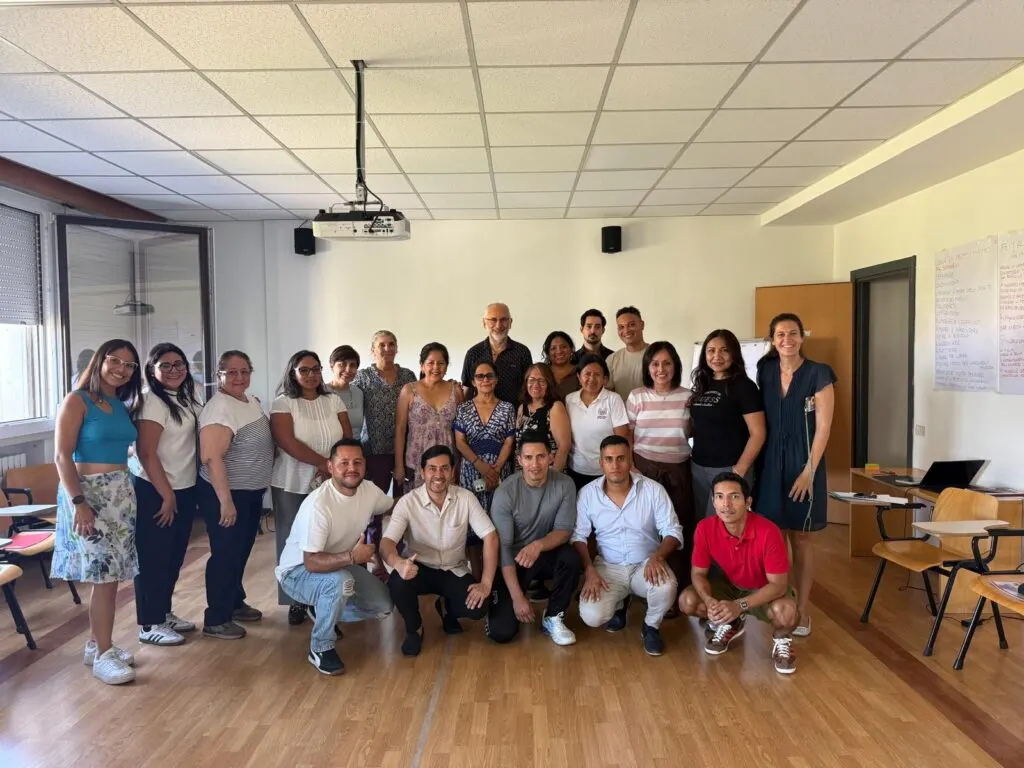
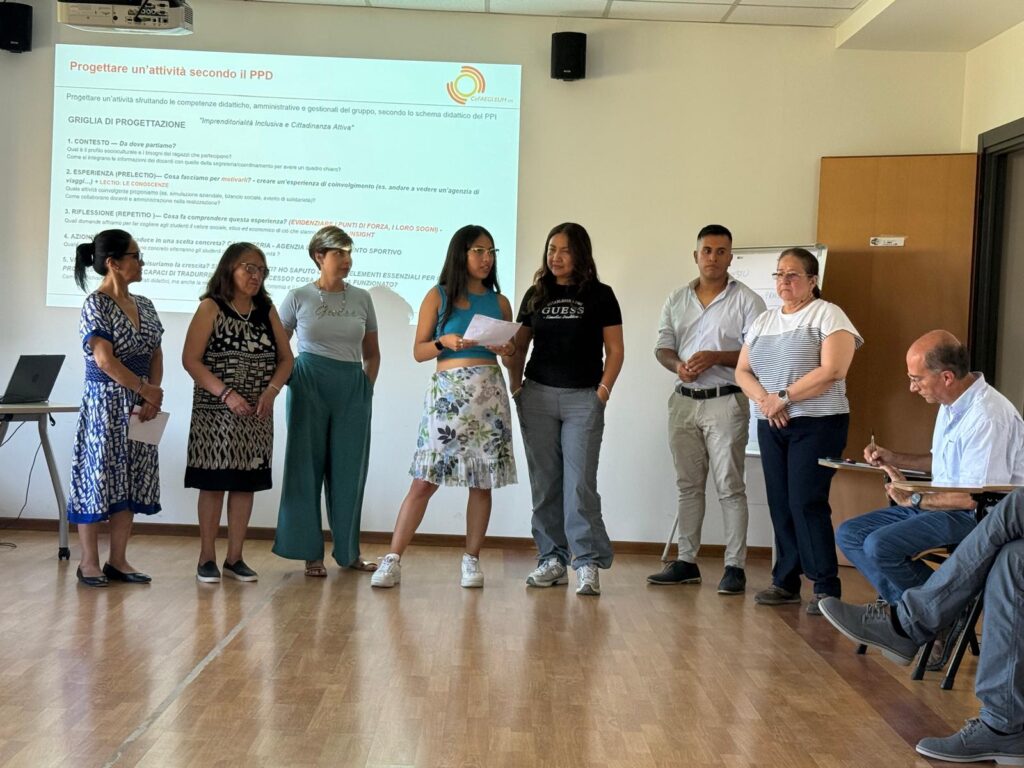
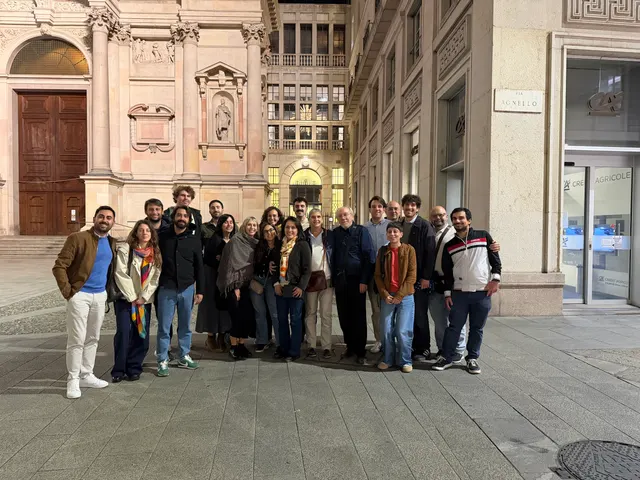
Pause, listen, reflect, learn. And return to school with a fresh perspective. This was the essence of the residential seminar “Introduction to Ignatian Methodology and Didactics,” which on September 5 and 6 brought together teaching and non-teaching staff from the Fe y Alegría Italia centers in Milan, Genoa, and Rome.
Two days organized by CEFAEGI – Training Center for Educational Activities of the Jesuits of the Euro-Mediterranean Province and led by Father Vitangelo C.M. Denora S.J., Father Luciano Larivera S.J., and Professor Sabrina Maineri, to rediscover what it means to be educators today.
Because educating does not simply mean transmitting knowledge. It means accompanying people, acknowledging their history, talents, and vulnerabilities, helping them discover their potential, and empowering them to become the protagonists of their own journey.
Before educating others, pause and look within
The seminar began with a simple yet profound question: what do we need in order to be able to care for others?
In a line of work built on relationships, listening, and accompaniment, educators also need to pause. To breathe. To revisit what they have experienced, recognize the beauty in their own lives, give thanks, and reread their own journey.
“Caring for ourselves to care for others,” “going deeper,” “being more mindful,” “sharing,” “strengthening relationships”: these are some of the words that emerged during the two days.
Training thus also becomes a space for personal and community growth, as well as professional development.
From reality arises the mission
To understand Ignatian pedagogy, it was also important to retrace the history of Fe y Alegría: a Movement founded in Venezuela in 1955 by Father José María Vélaz S.J., driven by a conviction that continues to guide its action today: “Fe y Alegría begins where the asphalt ends.”
It is the idea of an education capable of reaching those at risk of remaining on the margins and turning a need into an opportunity.
It is also the story of Fe y Alegría in Italy.
In the early 2000s, several educators and members of the Latin American community faced a concrete need: offering migrant youth and adults the opportunity to continue or complete their education.
The response was born from listening and from the initiative of individuals who asked themselves: “What can I do?”
In 2001, in Rome, the journey began with just a few students and teachers, seeking spaces and opportunities where they could get started. In the years that followed, thanks to the partnership with the Society of Jesus and an ever-expanding network of people and institutions, that experience grew into what is now Fe y Alegría Italia, with centers in Milan, Genoa, and Rome.
In Genoa as well, since 2004, Fe y Alegría has been offering blended learning educational programs in collaboration with IRFEYAL Ecuador, aimed at Latin American youth and adults who wish to complete their studies.
These are diverse stories, yet they share a common root: seeing a need and choosing to place oneself at the service of others.
Before the grade comes the face
It is from this perspective that Ignatian pedagogy takes on a particularly tangible meaning.
At the center of the seminar was the way of looking at the person proposed by Saint Ignatius of Loyola: every student brings a personal story, lived experiences, challenges, and possibilities.
Before being a student, there is a person.
Hence the principle of cura personalis: accompanying each individual on their journey, without reducing them to a grade, a performance, or a difficulty.
Educators are called to understand the context, build a relationship that fosters learning, choose the most appropriate tools, and, above all, leave room for others to walk their own path.
From experience to reflection, from reflection to action
One of the most concrete aspects of the seminar was the connection between the Spiritual Exercises of Saint Ignatius and daily educational work.
Ignatian pedagogy invites us to start from experience, accompany it with reflection, and transform what has been learned into a choice and an action.
In the classroom as well, it is not enough to ask: “What did you learn?”
It becomes important to ask:
What did you discover?
What does it mean to you?
What can you do with what you have learned?
It is a pedagogy that places the person at the center and aims for their integral formation: heart, mind, and hands.
The goal is not merely to better prepare a student for the working world, but to help them become more fully themselves and put their talents at the service of others.
Learning to recognize what lies behind a need
For those who work every day with youth and adults, this means learning to read what is not immediately visible.
Behind an academic difficulty, there may be a history of dropping out. Behind a request for help, there may be a need to be heard. Behind a lack of self-esteem, there may be a talent that has not yet found space to flourish.
And behind the desire to start over, there may be a dream.
Educating also means recognizing these possibilities.
This is what Fe y Alegría strives to do every day in its educational programs: accompany, create opportunities, strengthen skills and self-esteem, foster inclusion, and help each person build their own future.
A community growing together
The seminar was also an opportunity to strengthen the Fe y Alegría Italia community.
Because educating is a shared responsibility. Teachers, staff, students, families, institutions, and the local community all contribute, each in their own role, to building an educational community.
Sport was also used as an educational experience: the Milan Marathon, with the participation of Fe y Alegría, became a concrete example of collaboration, shared responsibility, and the ability to contribute toward a common goal.
The question to take back to the classroom
At the end of the two days, more than an answer, a question remains:
“What need am I reading?”
It is a question that harkens back to the origins of Fe y Alegría and its mission.
Because every educational journey begins with a gaze: the gaze of someone who knows how to pause, observe reality, recognize a need, and decide to take action.
From this arises the educator’s vocation.
From this arises a community.
And from this continues the journey of that spark ignited by Father Vélaz in 1955: education as a concrete opportunity to transform a person and, through them, the world.
Continua a leggere

Comments
Loading comments…