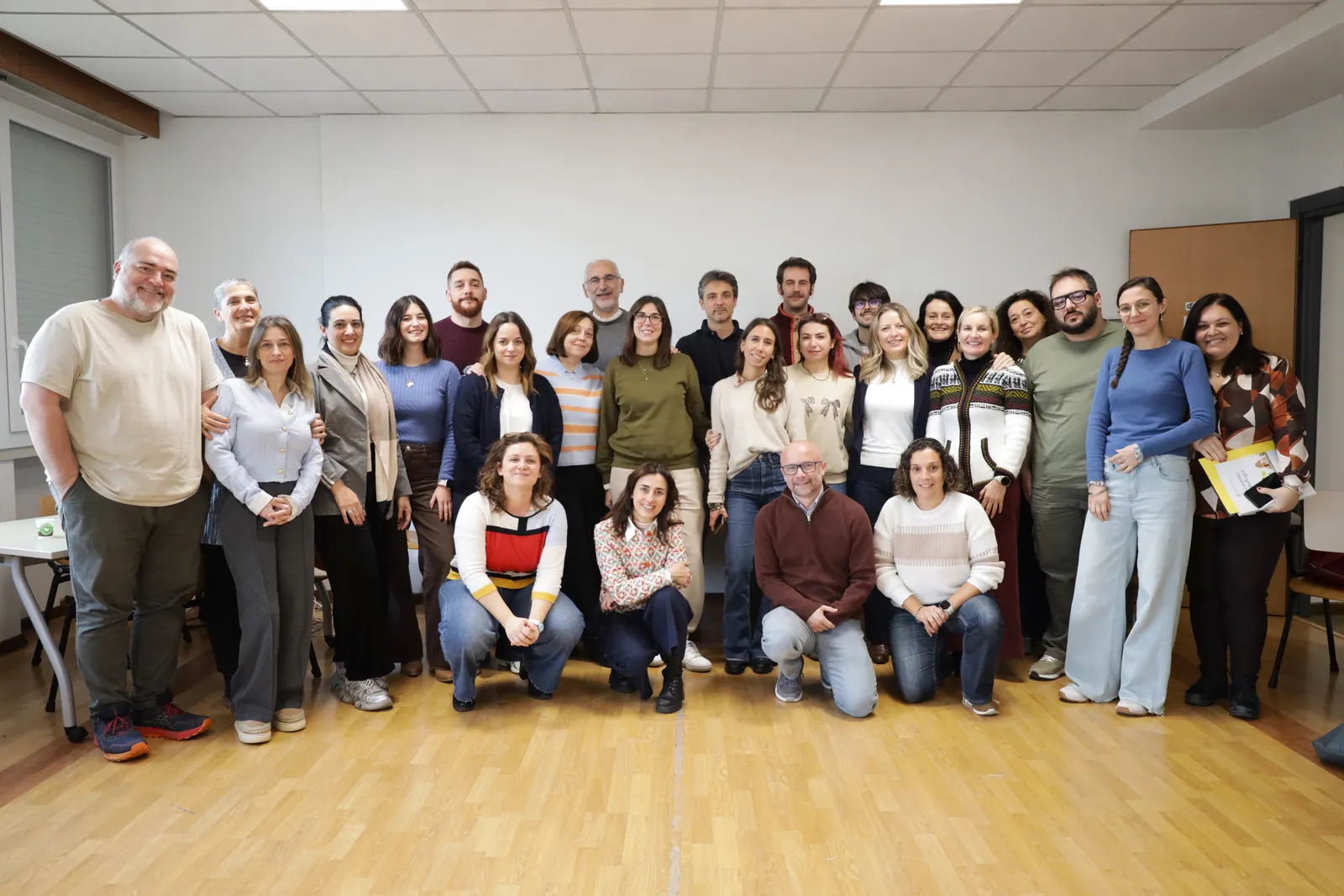
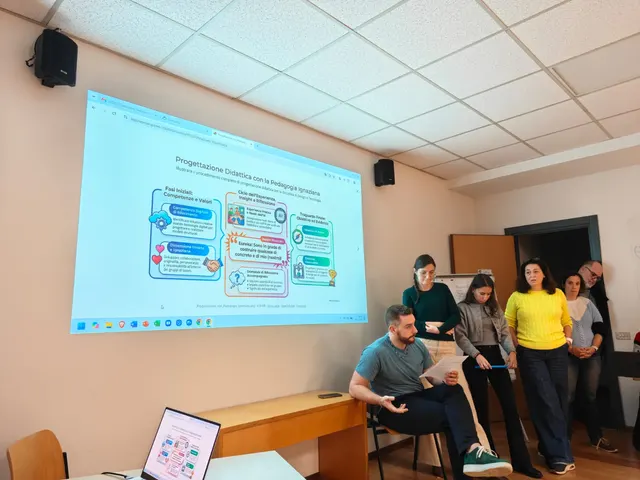
What changes in the way of knowing, thinking, teaching and learning, and of acting and choosing, when artificial intelligence enters school life? Around these questions the thematic seminar “Artificial Intelligence and Ignatian Pedagogy” unfolded, promoted by CeFAEGI.EUM ETS and held in Milan from 17 to 20 November 2026, with teachers from the Jesuit Education network in Milan, Turin, Rome, Palermo, Messina and Malta.
It was not a mere update on applying AI. The seminar followed the Ignatian Pedagogical Paradigm (context, experience, reflection, action and evaluation) so that technology would be questioned starting from the person, the educational relationship and the meaning of what is learned.
Engagement with the dossier “Education and Technology. Reflections and Practical Guidance” (Istituto Leone XIII) and the drafting of the Manifesto for an Algorithmic Ethics for F.G.E. schools opened a workshop: experiment in the colleges, observe, return to reflection and discernment.
Documents
Education and Technology guidelines
The research report for Istituto Leone XIII: method, synthesis of themes and practical guidance. Available in Italian and English, also in the Library.
Algor-ethics
Manifesto for F.G.E. schools
Ten orientations born of the seminar: not a list of technical bans, but criteria for responsibly inhabiting change.
- 01
Put the person at the centre
Orient every didactic and technological choice toward integral growth and each student’s uniqueness, refusing to reduce education to mere efficiency.
- 02
Safeguard the educational relationship
Preserve face-to-face encounter among teachers, students and families as an irreplaceable space of listening and accompaniment.
- 03
Subordinate technology to the human
Regard AI as a means of accompaniment, not an end: no algorithm replaces autonomous thought.
- 04
Responsibility and ethical discernment
Do not delegate to the machine what requires judgment, prudence and human choice, according to justice and the common good.
- 05
Value process over product
Privilege reflection on the learning journey over mere performance.
- 06
Respect the slow time and the labour of learning
Authentic maturation requires slowness, dialogue, uncertainty and the formative value of error.
- 07
Educate to critical thinking and wisdom
Accompany students in interpreting the overflow of information toward ethical awareness and a search for meaning.
- 08
Foster curiosity, passion and creativity
Stimulate questions, exploration and invention beyond mere memorisation of notions.
- 09
Build a shared educating community
Live digital challenges as a communal search that strengthens the alliance between school and family.
- 10
Ecological care and awareness of limit
Unite the desire to know with the wisdom of recognising one’s limits and responsibility toward the world.
Interviews
Voices from the seminar
Two portrait interviews, in Italian and English: the tone of the seminar, the open questions, the work that continues in the colleges.