

Attualità
Supporting those who educate: why teachers also continue to learn
Every day, a teacher enters the classroom to accompany new students in their growth and learning. They prepare lessons, ask questions, observe, listen, evaluate, encourage. And it is precisely while teaching that they , continue to learn: from students who change, from questions they had not anticipated, from difficulties that demand new answers, and from a society that continually transforms the way we communicate, acquire knowledge, and build relationships.
October 5, World Teachers' Day, offers an opportunity to recognize the value of a profession essential to the future of education. In 2026, this international observance highlights in particular the need to protect, support, and value the teaching profession in a rapidly changing world.
But valuing teachers also means offering them the opportunity to continue growing. Because those who guide the education of others need, in turn, spaces in which to reflect, exchange ideas, and renew their way of educating.
A profession that changes along with the world
Being a teacher today means facing transformations that deeply affect schools. Digital technologies and artificial intelligence are changing access to knowledge; classrooms are becoming increasingly diverse in terms of experiences, cultures, and needs; new vulnerabilities are emerging in young people's lives, and the skills demanded by society are rapidly evolving.
In this scenario, professional development is essential. But the training of an educator cannot be limited to learning new tools, methodologies, or technologies. There is an even deeper question: how does our way of educating change when the world students are called to inhabit changes?
Continuing to learn and train also means re-examining one's own experience, questioning the choices made, recognizing what works and what needs to be transformed. It means accepting that the experience accumulated over the years does not eliminate the need to keep learning.
In the educational tradition of the Society of Jesus, the teacher is not seen merely as the custodian of knowledge to be transmitted. They are a guide who accompanies students on their journey of growth, contributing to the formation of the whole person. Ignatian pedagogy pays particular attention to the context in which learning takes place, the student's experience, reflection on what is experienced, and the ability to translate what has been learned into action.
This process concerns the student, but inevitably also involves the teacher. An educator is called to observe what happens, question their own way of acting, and, when necessary, adapt it. Reflection on practice thus becomes an integral part of teacher professionalism.
Formation means reflecting on experience
One of the most significant aspects of the Ignatian formation of educators is reflexivity: the ability to return to experience to understand it more deeply.
A successful lesson, a difficulty encountered with a class, a meeting with a family, or an unexpected question from a student can become learning opportunities if they find a space in which to be reflected upon. From this perspective, experience alone is not enough: it is reflection on experience that makes it meaningful and transforms it into new educational choices.
This dynamic is deeply connected to the Ignatian Pedagogical Paradigm: experience, reflection, and action are not isolated moments, but parts of a process that accompanies growth. Including that of the adult.
Furthermore, formation does not happen only individually. A school grows when educators have the opportunity to share experiences, questions, difficulties, and best practices. Exchanging views with colleagues helps overcome the isolation that sometimes accompanies a teacher's work and transforms a practice developed in a single classroom into a resource for an entire educational community.
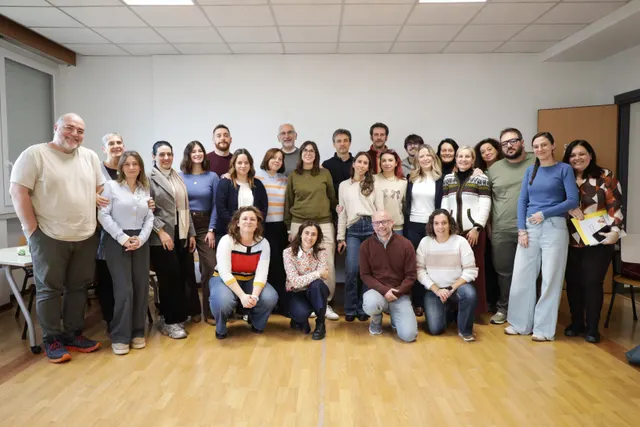
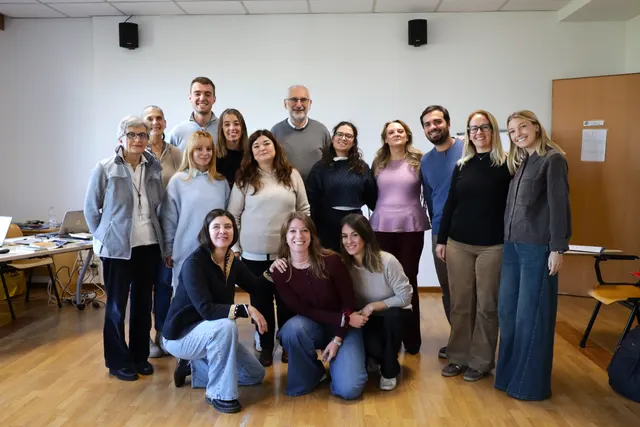
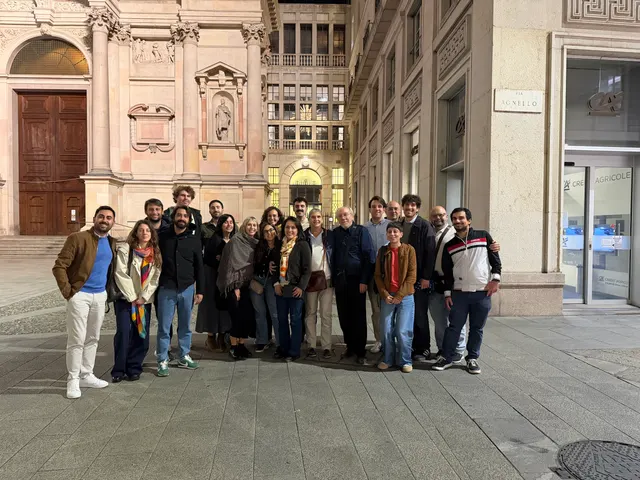
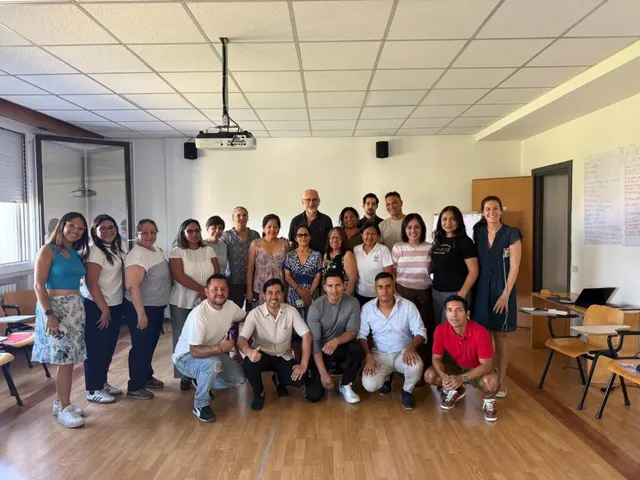
This is also why, in the vision of the Fondazione Gesuiti Educazione, the formation of educators takes on a networking dimension. Through CeFAEGI.EUM, the Jesuit Educational Activity Training Center, progressive and continuous pathways are promoted for both newly appointed teachers and more experienced educators. Seminars, in-depth study sessions, and courses on Ignatian pedagogy and methodology become opportunities not only to acquire tools, but to build a shared educational language and feel part of the same mission.
A tradition that continues to question itself
Teacher training occupies a central place in the Jesuit educational tradition because a school's identity does not live only in documents, curricula, or statements of principle. It takes shape every day through the people who inhabit the classrooms and build relationships with students.
Father Peter-Hans Kolvenbach recalled that, in a Society of Jesus school, the responsibility for moral and intellectual formation ultimately rests on the person of the teacher, rather than on curricula or proposed activities. It is a significant responsibility, which cannot, however, be lived as an individual task: it requires accompaniment, dialogue, and a professional community capable of supporting those who educate.
The Foundation's Guidelines for Ignatian Formation identify ongoing formation as an essential dimension of the educators' path, encouraging self-directed learning, self-assessment, and reflection on one's way of understanding and acting.
Tradition, in this sense, is not something to simply repeat, but something to continually engage with in order to understand how to respond to the educational questions of the present.
Perhaps one of the most valuable qualities of a teacher is not in always having the right answer, but in remaining open to asking further questions: What is this student truly experiencing? Why does a strategy that worked yesterday no longer work today? What can I learn from what happened in class? Is there something in my way of teaching that I can view from a different perspective?
These questions do not diminish the educator's authority. On the contrary, they emphasize that at the center lies the value of the relationship and speak of a professionalism that never considers itself completely finished.
Because teaching certainly means imparting what one knows, but also continuing to allow oneself to be transformed by the encounters, experiences, and questions that each new generation brings with it.
Continua a leggere
Comments
Loading comments…